
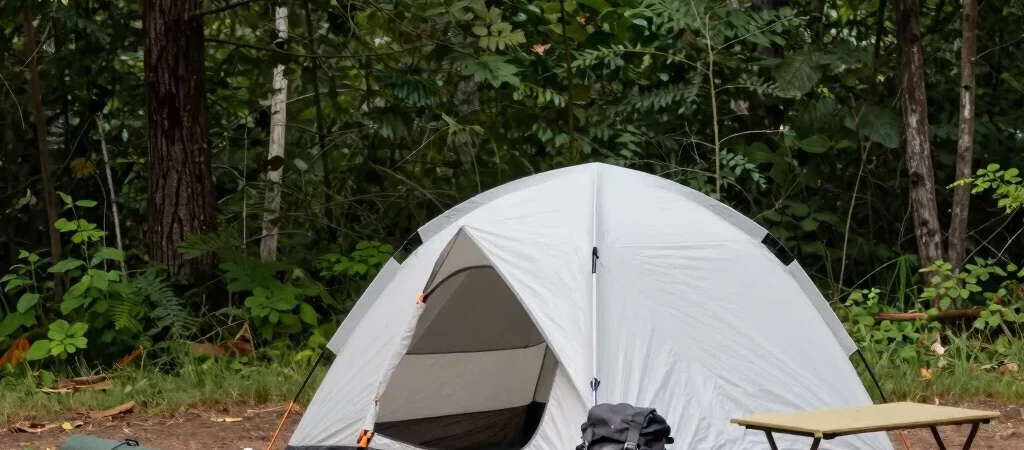
The first minutes at a campsite tend to set the pace for the evening. If the tent is still packed away, dinner is somewhere in the trunk, and daylight is slipping, even a straightforward setup can feel rushed. Decide in advance what needs attention first, and keep the arrival routine simple enough to follow when you’re tired.
Pause before unloading
Walk the site before carrying everything over. Look for the designated tent area, the direction of the slope, nearby trees or other overhead features, and the location of the parking space and campsite facilities. Follow the campground’s posted rules about where to pitch, fires, food storage, and quiet hours.
A few minutes spent choosing where things go can save repeated trips between the tent, vehicle, and picnic table. It also gives you a chance to notice anything that might change the setup, such as a wet patch or limited space.
Set up the sleeping space
Make the tent and sleeping gear the first major task, especially if you expect to arrive near dusk. Place the footprint or groundsheet according to the tent maker’s instructions, then pitch the tent and check that doors and gear are easy to reach. Keep headlamps or another planned light source somewhere accessible rather than buried in a duffel.
Once the sleeping area is ready, unpack only what the evening needs. Leaving spare clothing and tomorrow’s gear organized can make the morning feel less like a search through every bag.
Use a short evening checklist
Before settling in, confirm where food should be stored, where water is available, and how the campground handles waste and fires. Use the posted guidance and current local notices; rules differ between campgrounds and may depend on conditions. If you have a stove, follow its instructions and the site’s restrictions.
Then put the items you’ll need first thing—water, layers, and any trail essentials—in one predictable place. The best campsite routine is less about elaborate organization than making the next small task obvious.